Skip to content
If you have started researching garage floor coatings, you have probably heard a lot of strong opinions. Some sound convincing. Others sound like horror stories passed around at backyard barbecues. As a result, many homeowners hesitate because of myths that are either outdated, incomplete, or just plain wrong.
At Profeta Garage Floors, we hear these concerns every week. So today, let’s clear the air. Below are some of the most common garage floor myths and what actually matters when you are choosing the right floor for your space.
Myth #1: “Epoxy floors are slippery”
This is easily the most common concern. And honestly, it is understandable.
Yes, some epoxy floors can be slippery. However, that usually happens when the floor is smooth, glossy, and installed without traction additives. In other words, it is not an epoxy problem. It is an installation and design choice.
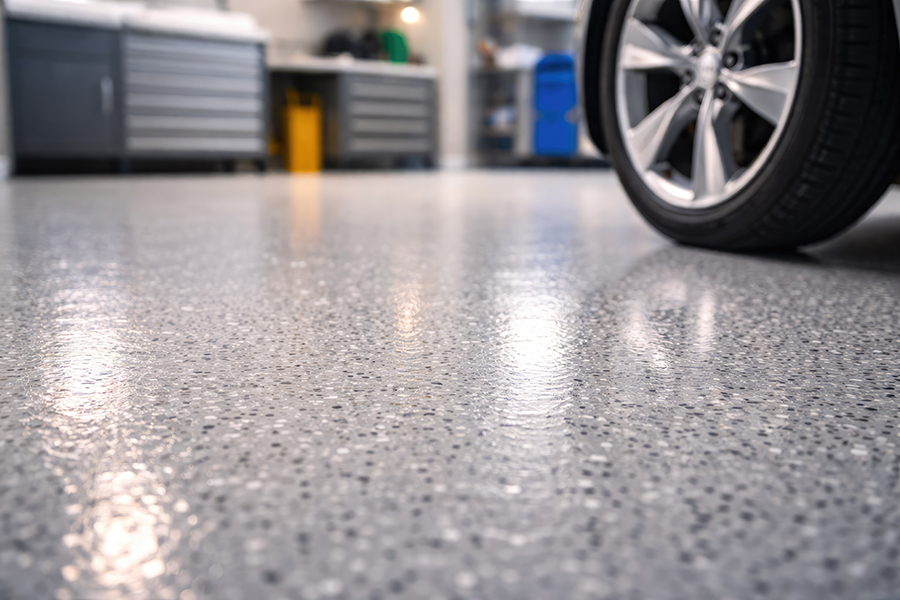
Modern garage floor systems use slip-resistant additives that are mixed into the topcoat. These additives create texture you can feel underfoot, even when the floor is wet. Because of this, a professionally installed epoxy or polyaspartic floor is often less slippery than bare concrete.
Bare concrete absorbs moisture, oil, and salt. Over time, it becomes dusty and unpredictable. In contrast, a coated floor can be customized for grip, safety, and daily use.
According to the National Ready Mixed Concrete Association, untreated concrete is naturally porous and vulnerable to moisture and surface deterioration over time. This porosity is one of the primary reasons unsealed concrete can become unpredictable under wet conditions.
So yes, epoxy can be slippery. But it does not have to be. And when done right, it usually is not.
Myth #2: “All epoxy floors yellow over time”
This myth comes from older epoxy formulas that were not UV-stable. Years ago, many epoxy coatings would discolor when exposed to sunlight, especially near garage doors.
Today, that issue is easy to solve.
Most professional garage floor systems now use UV-stable topcoats, often polyaspartic or polyurea. These materials are designed to resist yellowing and fading, even in garages that receive a lot of direct sunlight.
As a result, yellowing is no longer a reason to avoid epoxy floors. Instead, it is a reason to choose the right system and the right installer.
At Profeta Garage Floors, we design each floor with UV exposure in mind. That way, the floor looks just as good years later as it did on day one.
Myth #3: “Garage floor coatings peel after a few years”
When people say epoxy floors peel, they are often reacting to a bad experience they saw or heard about. But peeling is not random. It has a cause.
In nearly every case, peeling happens because of poor surface preparation. Concrete must be mechanically ground to open the pores before any coating is applied. Acid washing or simple cleaning is not enough.
And in colder climates like Rochester, environmental stress also plays a major role in coating performance, especially when salt and freeze-thaw cycles are involved.
If the surface is not prepared correctly, the coating cannot bond properly. Over time, moisture pressure or temperature changes can cause it to lift.
That is why professional preparation matters more than the product itself. A high-quality coating installed over poorly prepared concrete will still fail.
This is one area where Profeta Garage Floors refuses to cut corners. Proper grinding, moisture testing, and inspection are not optional steps. They are the foundation of a long-lasting floor.
Additionally, homeowners often assume full replacement is the only solution when coatings fail, but in many cases recoating is the smarter long-term option.
Myth #4: “Epoxy is outdated. Polyaspartic is always better”
This one sounds modern, but it oversimplifies the decision.
Epoxy, polyaspartic, and polyurea are different materials with different strengths. None of them is automatically “better” in every situation.
Epoxy is excellent for building thickness, leveling imperfections, and creating a strong base layer. Polyaspartic cures faster, resists UV exposure, and performs well in temperature swings. Polyurea offers flexibility and extreme durability.
The best garage floors often use a system, not a single product. Each layer has a purpose.
The real question is not which material is trendy. Instead, it is which combination is right for your garage, your climate, and how you use the space.
Myth #5: “DIY epoxy kits are basically the same thing”
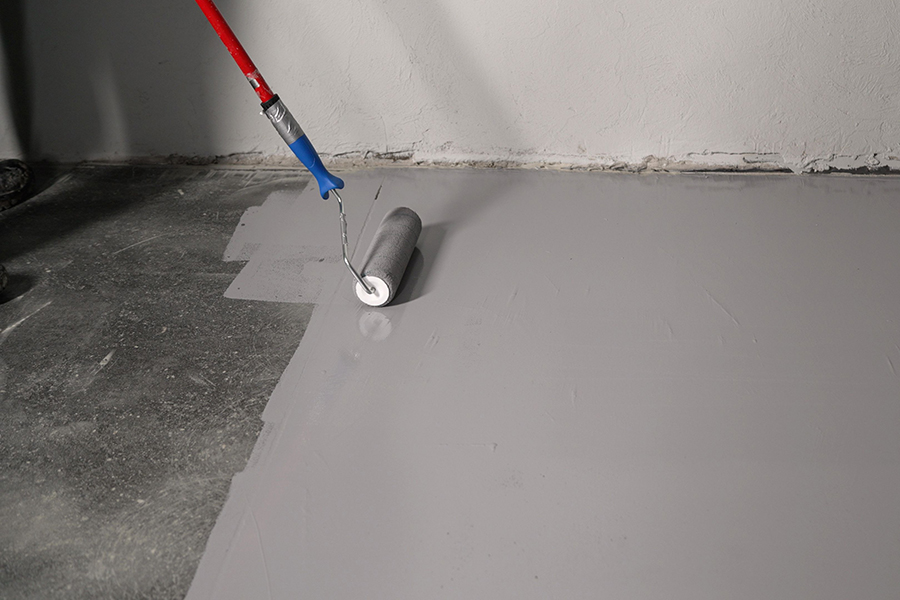
Big-box store kits have made epoxy sound simple. Roll it on, let it dry, and enjoy your new floor. Unfortunately, reality is not that forgiving.
DIY kits usually:
-
Skip mechanical surface preparation
-
Use thinner, lower-grade materials
-
Lack moisture mitigation
-
Offer limited design and traction options
Because of this, many DIY floors fail within a few years. Some fail within months.
Professional systems are thicker, stronger, and designed for long-term performance. More importantly, they are installed by crews who understand concrete behavior, moisture movement, and curing conditions.
There is nothing wrong with being handy. But garage floors are not just paint. They are a bonded system that lives on a surface that constantly expands, contracts, and absorbs moisture.
Myth #6: “Coated floors crack like concrete”
Here is the truth: concrete cracks. Floors do not cause cracks. Concrete movement does.
A quality garage floor coating will not prevent concrete from cracking. However, it can help manage minor imperfections and make cracks far less noticeable.
In addition, flexible coatings like polyurea are designed to move with the slab. This flexibility helps reduce stress on the surface over time.
Ignoring concrete does not make cracks go away. Protecting it helps control how those imperfections affect your space.
Myth #7: “Garage floors are just cosmetic upgrades”
This is one of the most underestimated myths.
A coated garage floor is easier to clean, safer to walk on, and more resistant to moisture, salt, oil, and chemicals. It also protects the concrete slab itself, which is expensive to repair or replace.
Additionally, garages are no longer just for parking. They are workshops, gyms, storage areas, and entry points into the home. A clean, durable floor changes how the entire space functions.
While the visual upgrade is obvious, the functional value is often even greater.
The real takeaway
Most garage floor myths come from bad installs, outdated materials, or one-size-fits-all advice. When people say epoxy fails, they are often reacting to shortcuts, not the concept itself.
A professionally designed and installed system can be durable, safe, attractive, and long-lasting.
At Profeta Garage Floors, we focus on education as much as installation. We believe homeowners deserve to understand what they are getting and why it works.
If you have heard a garage floor horror story, chances are there is more to it than meets the eye. And if you are considering upgrading your garage, asking the right questions makes all the difference.
Because when it comes to garage floors, the truth is far more solid than the myths.
If you still have questions about garage floor coatings, we’re happy to walk you through the facts.
Contact Profeta Garage Floors today to schedule a consultation and get honest answers about the right system for your space.